
Product Description
Product Description
| Bore of cylinder’s first stage | Stroke | Upper mouting | Upper mouting | Mounting dimension | Working pressure | ||
| Diameter of the hole | Deep | Diameter of the hole | Deep | ||||
| 5 | 84.00 | 1.63 | 1.50 | 2.00 | 7.00 | 41.09 | 2500 |
| 6 | 120.06 | 2.00 | 2.00 | 2.00 | 7.00 | 52.62 | 2500 |
| 7 | 120.00 | 2.00 | 2.00 | 2.00 | 8.25 | 53.12 | 2500 |
| 8.125 | 234.00 | 2.00 | 2.00 | 2.00 | 9.50 | 64.62 | 2500 |
| 9.375 | 235.00 | 2.00 | 2.00 | 2.00 | 10.88 | 65.44 | 2500 |
| L2 | L3 | L4 | L5 | L6 | ØA | Fitting | Workable container length | Rear suspension length | Lift angle | Lift capacity | Oil tank volume |
| 65 | 360 | 60 | 325 | 1585 | Ø60 | G1 | 4700-5300 | 800 | 47-52° | 43 | 80 |
| 65 | 360 | 60 | 325 | 1270 | Ø60 | G1 | 4700-5300 | 800 | 47-52° | 31 | 80 |
| 65 | 360 | 60 | 325 | 1390 | Ø60 | G1 | 5300-6000 | 800 | 47-52° | 36 | 80 |
| 65 | 360 | 60 | 325 | 1510 | Ø60 | G1 | 5800-6500 | 800 | 47-52° | 36 | 80 |
| 65 | 360 | 60 | 325 | 1385 | Ø60 | G1 | 5300-5800 | 800 | 47-52° | 53 | 80 |
| 65 | 360 | 60 | 325 | 1505 | Ø60 | G1 | 5800-6500 | 800 | 47-52° | 53 | 100 |
| 65 | 360 | 60 | 325 | 1580 | Ø60 | G1 | 6200-6800 | 800 | 47-52° | 58 | 100 |
| 65 | 360 | 60 | 325 | 1655 | Ø60 | G1 | 6600-7200 | 800 | 47-52° | 58 | 100 |
| 65 | 360 | 60 | 325 | 1125 | Ø60 | G1 | 5000-5500 | 800 | 47-52° | 46 | 80 |
| 65 | 360 | 60 | 325 | 1165 | Ø60 | G1 | 5300-6000 | 800 | 47-52° | 46 | 80 |
| 65 | 360 | 60 | 325 | 1265 | Ø60 | G1 | 5800-6500 | 800 | 47-52° | 49 | 80 |
| 65 | 360 | 60 | 325 | 1340 | Ø60 | G1 | 6200-6800 | 800 | 47-52° | 49 | 80 |
| 65 | 360 | 60 | 325 | 1385 | Ø60 | G1 | 6600-7200 | 800 | 47-52° | 49 | 80 |
| 65 | 360 | 65 | 325 | 1455 | Ø60 | G1 | 5600-6300 | 800 | 47-52° | 66 | 120 |
| 65 | 360 | 65 | 325 | 1505 | Ø60 | G1 | 5800-6500 | 800 | 47-52° | 66 | 120 |
| 65 | 360 | 65 | 325 | 1580 | Ø60 | G1 | 6200-6800 | 800 | 47-52° | 70 | 120 |
| 65 | 360 | 65 | 325 | 1655 | Ø60 | G1 | 6600-7200 | 800 | 47-52° | 70 | 120 |
| 65 | 360 | 65 | 325 | 1750 | Ø60 | G1 | 7200-8000 | 1000 | 47-52° | 70 | 135 |
| 65 | 360 | 65 | 325 | 1270 | Ø60 | G1 | 7200-8000 | 1000 | 47-52° | 49 | 120 |
| 65 | 360 | 65 | 325 | 1675 | Ø65 | G1 | 6600-7200 | 800 | 47-52° | 92 | 165 |
| 65 | 360 | 65 | 325 | 1770 | Ø65 | G1 | 7200-8000 | 1000 | 47-52° | 96 | 165 |
| 65 | 360 | 65 | 325 | 1870 | Ø65 | G1 | 8000-8500 | 1000 | 47-52° | 96 | 185 |
| 65 | 360 | 65 | 325 | 1770 | Ø65 | G1 | 8700-9500 | 1000 | 47-52° | 88 | 185 |
Company Profile
Certifications
Packaging & Shipping
FAQ
Q1: Can your cylinders with HYVA ones ?
Yes, our cylinders can replace HYVA ones well, with same technical details and mounting sizes
Q2: What’s your cylinder’s advantages ?
The cylinders are made under strictly quality control processing.
All the raw materials and seals we used are all from world famous companies.
Cost effective
Q3: When your company be established ?
Our company be established in 1996, and we are professional for hydraulic cylinders for more than 25 years.
And we had passed IATF 16949:2016 Quality control system.
Q4: How about the delivery time ?
For samples about 20 days. And 15 to 30 days about mass orders.
Q5: How about the cylinder’s quality gurantee ?
We have 1 year quality grantee of the cylinders.
| Certification: | ISO9001, IATF 16949:2016 |
|---|---|
| Pressure: | High Pressure |
| Work Temperature: | Normal Temperature |
| Acting Way: | Double Acting |
| Working Method: | Straight Trip |
| Adjusted Form: | Regulated Type |
| Samples: |
US$ 1000/Piece
1 Piece(Min.Order) | |
|---|
| Customization: |
Available
|
|
|---|
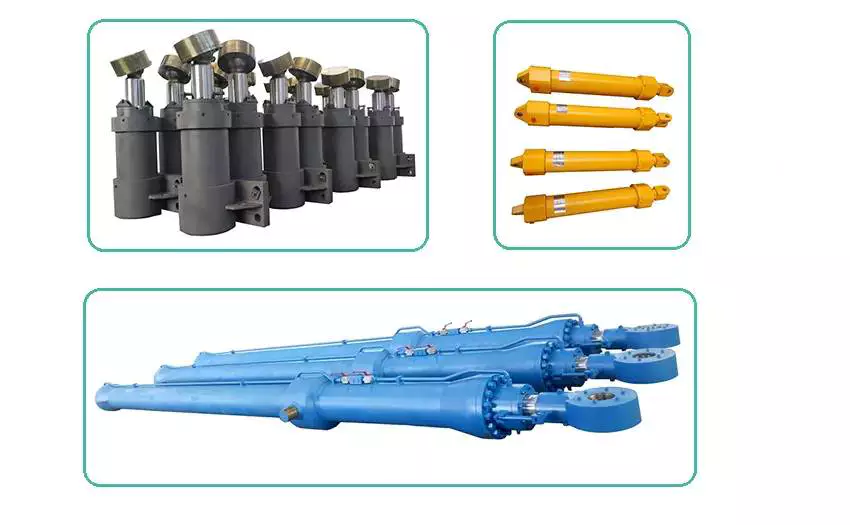
How do hydraulic cylinders compare to other methods of force generation like electric motors?
Hydraulic cylinders and electric motors are two different methods of force generation with distinct characteristics and applications. While both hydraulic cylinders and electric motors can generate force, they differ in terms of their working principles, performance attributes, and suitability for specific applications. Here’s a detailed comparison of hydraulic cylinders and electric motors:
1. Working Principle:
– Hydraulic Cylinders: Hydraulic cylinders generate force through the conversion of fluid pressure into linear motion. They consist of a cylinder barrel, piston, piston rod, and hydraulic fluid. When pressurized hydraulic fluid enters the cylinder, it pushes against the piston, causing the piston rod to extend or retract, thereby generating linear force.
– Electric Motors: Electric motors generate force through the conversion of electrical energy into rotational motion. They consist of a stator, rotor, and electromagnetic field. When an electrical current is applied to the motor’s windings, it creates a magnetic field that interacts with the rotor, causing it to rotate and generate torque.
2. Force and Power:
– Hydraulic Cylinders: Hydraulic cylinders are known for their high force capabilities. They can generate substantial linear forces, making them suitable for heavy-duty applications that require lifting, pushing, or pulling large loads. Hydraulic systems can provide high force output even at low speeds, allowing for precise control over force application. However, hydraulic systems typically operate at lower speeds compared to electric motors.
– Electric Motors: Electric motors excel in providing high rotational speeds and are commonly used for applications that require rapid motion. While electric motors can generate significant torque, they tend to have lower force output compared to hydraulic cylinders. Electric motors are suitable for applications that involve continuous rotary motion, such as driving conveyor belts, rotating machinery, or powering vehicles.
3. Control and Precision:
– Hydraulic Cylinders: Hydraulic systems offer excellent control over force, speed, and positioning. By regulating the flow of hydraulic fluid, the force and speed of hydraulic cylinders can be precisely controlled. Hydraulic systems can provide gradual acceleration and deceleration, allowing for smooth and precise movements. This level of control makes hydraulic cylinders well-suited for applications that require precise positioning, such as in industrial automation or construction equipment.
– Electric Motors: Electric motors also offer precise control over speed and positioning. Through motor control techniques such as varying voltage, frequency, or pulse width modulation (PWM), the rotational speed and position of electric motors can be accurately controlled. Electric motors are commonly used in applications that require precise speed control, such as robotics, CNC machines, or servo systems.
4. Efficiency and Energy Consumption:
– Hydraulic Cylinders: Hydraulic systems can be highly efficient, especially when properly sized and designed. However, hydraulic systems typically have higher energy losses due to factors such as fluid leakage, friction, and heat generation. The overall efficiency of a hydraulic system depends on the design, component selection, and maintenance practices. Hydraulic systems require a hydraulic power unit to pressurize the hydraulic fluid, which consumes additional energy.
– Electric Motors: Electric motors can have high efficiency, especially when operated at their optimal operating conditions. Electric motors have lower energy losses compared to hydraulic systems, primarily due to the absence of fluid leakage and lower friction losses. The overall efficiency of an electric motor depends on factors such as motor design, load conditions, and control techniques. Electric motors require an electrical power source, and their energy consumption depends on the motor’s power rating and the duration of operation.
5. Environmental Considerations:
– Hydraulic Cylinders: Hydraulic systems typically use hydraulic fluids that can pose environmental concerns if they leak or are not properly disposed of. The choice of hydraulic fluid can impact factors such as biodegradability, toxicity, and potential environmental hazards. Proper maintenance and leak prevention practices are essential to minimize the environmental impact of hydraulic systems.
– Electric Motors: Electric motors are generally considered more environmentally friendly since they do not require hydraulic fluids. However, the environmental impact of electric motors depends on the source of electricity used to power them. When powered by renewable energy sources, such as solar or wind, electric motors can offer a greener solution compared to hydraulic systems.
6. Application Suitability:
– Hydraulic Cylinders: Hydraulic cylinders are commonly used in applications that require high force output, precise control, and durability. They are widely employed in industries such as construction, manufacturing, mining, and aerospace. Hydraulic systems are well-suited for heavy-duty applications, such as lifting heavy objects, operating heavy machinery, or controlling large-scale movements.
– Electric Motors: Electric motors are widely used in various industries and applications that require rotational motion, speed control, and precise positioning. They are commonly found in appliances, transportation, robotics, HVAC systems, and automation. Electric motorsare suitable for applications that involve continuous rotary motion, such as driving conveyor belts, rotating machinery, or powering vehicles.In summary, hydraulic cylinders and electric motors have different working principles, force capabilities, control characteristics, efficiency levels, and application suitability. Hydraulic cylinders excel in providing high force output, precise control, and durability, making them ideal for heavy-duty applications. Electric motors, on the other hand, offer high rotational speeds, precise speed control, and are commonly used for applications that involve continuous rotary motion. The choice between hydraulic cylinders and electric motors depends on the specific requirements of the application, including the type of motion, force output, control precision, and environmental considerations.
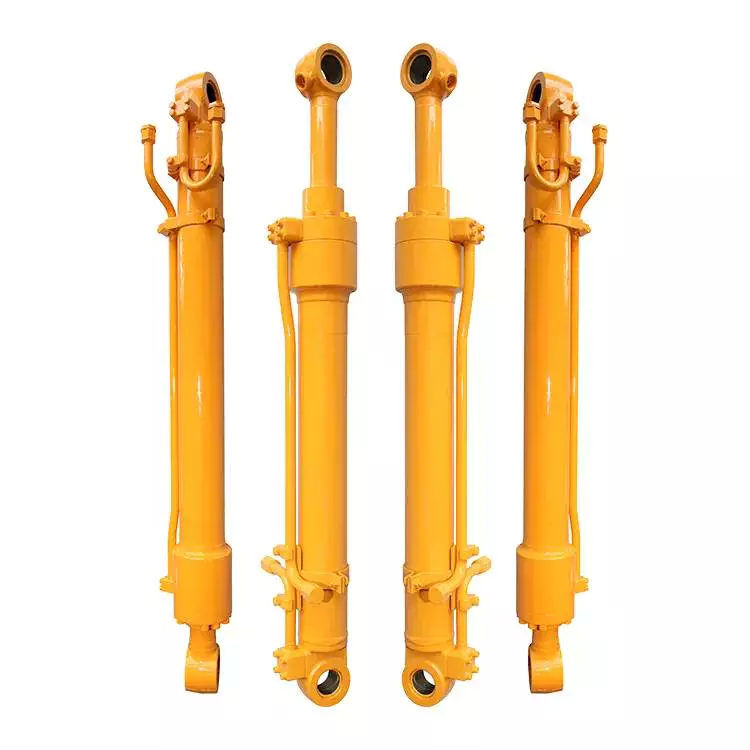
Utilizing Hydraulic Cylinders in Conjunction with Alternative Energy Sources
Hydraulic cylinders can indeed be used in conjunction with alternative energy sources. The versatile nature of hydraulic systems allows them to be integrated with various alternative energy technologies to enhance efficiency, control, and power generation. Let’s explore some examples of how hydraulic cylinders can be utilized alongside alternative energy sources:
- Hydraulic Energy Storage: Hydraulic cylinders can be employed in energy storage systems that utilize alternative energy sources such as renewable sources (e.g., solar or wind) or waste energy recovery. These systems convert excess energy into hydraulic potential energy by pumping fluid into a high-pressure accumulator. When the energy is needed, the pressurized fluid is released, driving the hydraulic cylinder and generating mechanical power.
- Wave and Tidal Energy Conversion: Hydraulic cylinders can be utilized in wave and tidal energy conversion systems. These systems harness the power of ocean waves or tidal currents and convert it into usable energy. Hydraulic cylinders, along with associated pumps and valves, can be used to capture and control the energy from the waves or tides, driving the cylinders and generating mechanical power or producing electricity.
- Hydroelectric Power Generation: Hydraulic cylinders play a crucial role in traditional hydroelectric power generation. However, alternative approaches such as small-scale or micro-hydropower systems can also benefit from hydraulic cylinders. These systems utilize natural or man-made water flows to drive turbines connected to hydraulic cylinders, which then convert the hydraulic energy into mechanical power or electricity.
- Hydraulic Actuation in Wind Turbines: Hydraulic cylinders can be employed in wind turbines to enhance performance and control. For example, hydraulic pitch control systems use hydraulic cylinders to adjust the pitch angle of wind turbine blades, optimizing their aerodynamic performance based on wind conditions. This allows for efficient power generation and protection against excessive wind loads.
- Geothermal Energy Extraction: Geothermal energy extraction involves utilizing the natural heat from the Earth’s interior to generate power. Hydraulic cylinders can be utilized in geothermal systems to control and regulate fluid flow, allowing for efficient extraction and utilization of geothermal energy. They can also be used in geothermal heat pumps for heating and cooling applications.
In summary, hydraulic cylinders can be effectively utilized in conjunction with alternative energy sources to enhance energy storage, power generation, and control. Whether it’s through hydraulic energy storage systems, wave and tidal energy conversion, hydroelectric power generation, hydraulic actuation in wind turbines, or geothermal energy extraction, hydraulic cylinders offer versatile and efficient solutions for harnessing and utilizing alternative energy sources.
Can hydraulic cylinders be adapted for use in both industrial and mobile equipment?
Yes, hydraulic cylinders can be adapted for use in both industrial and mobile equipment. The versatility and adaptability of hydraulic systems make them suitable for a wide range of applications across various industries. Here’s a detailed explanation:
1. Industrial Equipment:
– Hydraulic cylinders are extensively used in industrial equipment such as manufacturing machinery, construction equipment, material handling systems, and heavy-duty machinery. They provide the necessary force and controlled movement for tasks such as lifting, pushing, pulling, and positioning heavy loads. Industrial hydraulic cylinders are typically designed for robustness, durability, and high load-bearing capacities to withstand the demanding environments and heavy-duty applications encountered in industries.
2. Mobile Equipment:
– Hydraulic cylinders are also widely adopted in mobile equipment, including agricultural machinery, mining equipment, forestry machinery, and transportation vehicles. These cylinders enable various functions such as tilting, lifting, steering, and stabilizing. Mobile hydraulic cylinders are designed to be compact, lightweight, and efficient to meet the specific requirements of mobile applications. They are often integrated into hydraulic systems that power multiple functions in a single machine.
3. Adaptability:
– One of the key advantages of hydraulic cylinders is their adaptability. They can be customized and configured to suit different operating conditions, equipment sizes, load capacities, and speed requirements. Hydraulic cylinder manufacturers offer a wide range of sizes, stroke lengths, mounting options, and rod configurations to accommodate diverse applications. This adaptability allows hydraulic cylinders to be utilized in both industrial and mobile equipment, serving various purposes across different sectors.
4. Mounting Options:
– Hydraulic cylinders can be adapted to different mounting arrangements to suit the specific requirements of industrial and mobile equipment. They can be mounted in various orientations, including vertical, horizontal, or at an angle. Different mounting options, such as flange mounts, trunnion mounts, and clevis mounts, provide flexibility in integrating hydraulic cylinders into different equipment designs.
5. Integration with Hydraulic Systems:
– Hydraulic cylinders are often part of a larger hydraulic system that includes components such as pumps, valves, hoses, and reservoirs. These systems can be tailored to meet the specific needs of both industrial and mobile equipment. The hydraulic system’s design and configuration can be adapted to provide the necessary flow rates, pressures, and control mechanisms required for optimal performance in the intended application.
6. Control and Automation:
– Hydraulic cylinders in both industrial and mobile equipment can be integrated with control systems and automation technologies. This allows for precise and automated control of the cylinder’s movement and function. Proportional control valves, sensors, and electronic controls can be incorporated to achieve accurate positioning, speed control, and synchronization of multiple hydraulic cylinders, enhancing overall equipment performance and productivity.
7. Safety Considerations:
– Hydraulic cylinders for both industrial and mobile equipment are designed with safety in mind. They often feature built-in safety mechanisms such as overload protection, pressure relief valves, and emergency stop systems to prevent accidents and equipment damage. Safety standards and regulations specific to each industry are taken into account during the design and adaptation of hydraulic cylinders for different applications.
Overall, hydraulic cylinders offer the adaptability and performance required for use in both industrial and mobile equipment. Their versatility, customizable features, mounting options, integration capabilities, and safety considerations make them suitable for a wide range of applications across diverse industries. Whether it’s heavy-duty industrial machinery or mobile equipment operating in challenging environments, hydraulic cylinders can be adapted to meet the specific needs and requirements of various equipment types.


editor by CX 2023-11-15