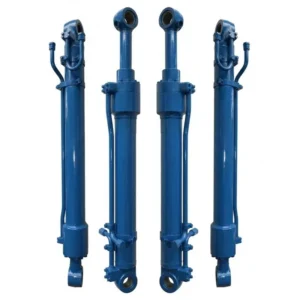
Description
Product Overview of Forklift Steering Hydraulic Cylinders
In the demanding world of material handling, forklift steering hydraulic cylinders play a crucial role in ensuring precise control and reliable performance. These components are designed to convert hydraulic energy into linear motion, enabling smooth steering operations in forklifts across various industrial settings. At Ever-Power, we focus on producing high-quality hydraulic cylinders that meet the specific needs of forklift applications, incorporating robust materials and advanced sealing technologies to withstand harsh environments. This overview explores the fundamental aspects of these cylinders, highlighting their importance in enhancing forklift maneuverability, especially in tight spaces common in warehouses and manufacturing plants in Korea.
Building on that, forklift steering hydraulic cylinders are engineered for durability and efficiency, often featuring double-acting designs that allow for bidirectional force application. This setup ensures responsive steering, reducing operator fatigue and improving overall safety. Our models are compatible with a range of forklift brands, and we emphasize customization options to fit unique requirements, such as varying stroke lengths and mounting configurations. By integrating these cylinders, operators in Korean logistics hubs can achieve better vehicle stability during turns, minimizing wear on tires and other components. Furthermore, the use of heavy duty hydraulic cylinders in steering systems contributes to longer service life, making them a cost-effective choice for businesses aiming to optimize their fleet operations.
To delve deeper, consider the integration of these cylinders with modern forklift designs. They often include features like chrome-plated rods to resist corrosion, which is particularly beneficial in humid coastal areas of Korea. Maintenance is straightforward, with accessible ports for fluid checks, ensuring minimal downtime. In practice, these cylinders support loads up to several tons while maintaining precision, a key factor in high-throughput environments. Operators appreciate the smooth response, which translates to fewer accidents and higher productivity. Ever-Power’s commitment to quality means each cylinder undergoes rigorous testing, aligning with international standards to deliver reliable performance day after day.
- Enhanced steering precision for better control in confined spaces.
- Robust construction to handle daily operational stresses.
- Compatibility with various forklift models prevalent in Korean markets.
Expanding on real-world applications, these hydraulic cylinders are vital in sectors like automotive assembly and food distribution, where quick directional changes are essential. Their design minimizes hydraulic fluid leakage, promoting environmental safety. For Korean enterprises, this means compliance with local regulations on equipment efficiency. Overall, investing in quality forklift steering hydraulic cylinders from Ever-Power leads to improved operational workflows and reduced long-term costs.
Technical Specifications of Hydraulic Cylinders for Forklifts
Understanding the technical specifications of forklift steering hydraulic cylinders is essential for selecting the right component for your equipment. These specs outline the performance parameters, ensuring compatibility and optimal function in steering systems. At Ever-Power, we provide detailed data to help Korean customers make informed decisions, focusing on metrics like bore size and operating pressure that directly impact steering responsiveness.
| Parameter | Value |
|---|---|
| Bore Diameter | 50-100 mm |
| Rod Diameter | 30-60 mm |
| Stroke Length | 200-500 mm |
| Operating Pressure | Up to 250 bar |
| Material | High-strength steel with chrome plating |
| Seal Type | Polyurethane and nitrile |
| Mounting Style | Clevis or trunnion |
If you have specific customization needs beyond these standard specifications, such as adjusted stroke lengths or specialized seals for Korean industrial conditions, please contact our team at Ever-Power for tailored solutions.
These specifications are derived from extensive testing to ensure reliability in forklift operations. For instance, the bore diameter range allows for varying force outputs, suitable for different forklift sizes. In Korean warehouses, where space is often limited, the compact design aids in seamless integration.
- Verify compatibility with your forklift model before installation.
- Regular pressure checks maintain peak performance.
- Custom options available for heavy duty hydraulic cylinders.
Advantages of Heavy Duty Hydraulic Cylinders in Forklift Steering
Heavy duty hydraulic cylinders offer significant advantages in forklift steering, providing enhanced durability and precision that standard models may lack. These cylinders are built to handle high loads and frequent use, making them ideal for intensive operations in Korean distribution centers. One key benefit is their resistance to wear, thanks to reinforced components that extend service intervals and reduce replacement costs over time.
Additionally, the superior force generation of these cylinders improves steering response, allowing operators to navigate obstacles with ease. In competitive markets, this translates to higher efficiency and lower accident rates. Ever-Power’s heavy duty options incorporate advanced materials, ensuring they perform reliably under varying temperatures common in Korea’s climate.
Key Durability Features
Durability is paramount, with features like corrosion-resistant coatings protecting against environmental factors. This is especially useful in port areas where salt exposure is high.
- Extended lifespan through robust welding techniques.
- Reduced maintenance needs due to self-lubricating seals.
Operators in manufacturing report fewer breakdowns, leading to consistent productivity. Compared to lighter alternatives, these cylinders provide better value through longevity.
Working Principle of Steering Hydraulic Cylinders
The working principle of steering hydraulic cylinders in forklifts is grounded in fundamental hydraulic mechanics, primarily Pascal’s law, which states that pressure applied to a confined fluid is transmitted undiminished in all directions. In practice, this means that when hydraulic fluid is pumped into the cylinder under pressure, it exerts force on the piston, causing the rod to extend or retract linearly. This motion is directly linked to the forklift’s steering mechanism, allowing for controlled pivoting of the wheels or axle. For forklift steering hydraulic cylinders, a double-acting configuration is common, enabling powered movement in both directions—extension for one turn and retraction for the opposite—ensuring balanced and responsive control.
From a technical standpoint, the cylinder’s components—such as the barrel, piston, rod, and seals—work in harmony to prevent leaks and maintain integrity under load. Seals made from polyurethane or nitrile rubber provide dynamic sealing, accommodating the rod’s movement while containing the fluid. In heavy-duty applications, chrome-plated rods resist corrosion and wear, extending operational life. Understanding this principle aids in diagnostics; for example, sluggish steering might indicate air entrapment or low fluid levels, which can be addressed through bleeding or replenishment. Ever-Power’s designs incorporate advanced features like cushioning at stroke ends to absorb shocks, improving smoothness and component longevity.
Step-by-Step Operational Breakdown
- Operator inputs steering command, engaging the control valve.
- Hydraulic pump supplies pressurized fluid to the designated cylinder chamber.
- Piston moves, extending or retracting the rod to adjust wheel angle.
- Feedback loop ensures proportional response to input for precise control.
- System returns to neutral, maintaining stability until next command.
This mechanism not only supports standard operations but also integrates with modern electronic controls for enhanced automation in smart warehouses. In Korea’s evolving logistics sector, such systems contribute to energy efficiency and reduced maintenance downtime. Potential issues, like seal degradation from contaminants, can be mitigated through regular filtration and fluid analysis. Overall, the working principle underscores the reliability of hydraulic cylinders in demanding steering applications, making them indispensable for safe and efficient forklift performance.
- Efficient force multiplication for handling heavy loads.
- Adaptable to various pressure ranges for customized performance.
- Integration with safety features like overload protection.
- Compatibility with eco-friendly hydraulic fluids for sustainability.
Engineers often optimize these systems by calibrating valve timings to match specific forklift models, ensuring minimal lag in response. As technology advances, hybrid systems combining hydraulics with electronics are emerging, but the core principle remains timeless. For businesses in Korea, mastering this understanding leads to better equipment selection and operational excellence.
Future Development Trends in Hydraulic Cylinder Technology
The future of hydraulic cylinder technology is poised for significant advancements, driven by demands for efficiency, sustainability, and integration with smart systems. One prominent trend is the incorporation of IoT (Internet of Things) sensors into cylinders, enabling real-time monitoring of parameters like pressure, temperature, and position. This predictive maintenance capability can forecast failures before they occur, reducing downtime in high-stakes environments such as Korean manufacturing plants. Materials science is also evolving, with the adoption of lightweight composites and advanced alloys that enhance strength-to-weight ratios without compromising durability, ideal for heavy duty hydraulic cylinders in forklifts.
Another key development is the shift toward electro-hydraulic systems, blending traditional hydraulics with electric actuation for precise control and energy savings. These hybrid designs minimize fluid usage and leakage, aligning with global environmental regulations. In Korea, where green initiatives are gaining traction, bio-based hydraulic fluids are becoming standard, reducing ecological impact while maintaining performance. Customization through 3D printing is emerging, allowing rapid prototyping of cylinder components tailored to specific applications, such as varying stroke lengths for forklift steering hydraulic cylinders. This trend accelerates innovation cycles and lowers production costs for manufacturers like Ever-Power.
Sustainability extends to energy-efficient designs, including variable displacement pumps that adjust flow based on demand, optimizing power consumption in steering systems. Autonomous forklifts are on the horizon, where advanced hydraulic cylinders integrate with AI for self-correcting steering, enhancing safety in automated warehouses. Research into nanotechnology for seals promises ultra-low friction and extended lifespans, addressing wear issues in harsh conditions. Globally, standards like ISO updates are pushing for smarter, more reliable cylinders, influencing Korean industries to adopt these technologies for competitive edges.
Emerging Innovations
- Smart sensors for condition-based maintenance.
- Lightweight materials for improved efficiency.
- Hybrid electro-hydraulic actuation systems.
- 3D-printed customizable components.
- AI integration for autonomous operations.
These trends not only improve functionality but also reduce operational costs. For instance, energy recovery systems in cylinders can recapture wasted energy during retraction, boosting overall system efficiency by up to 20%. In the context of types of hydraulic cylinders, telescopic and multi-stage designs are evolving to offer compact yet powerful solutions for space-limited applications. Challenges like cybersecurity in IoT-enabled cylinders are being addressed through robust encryption protocols. As Korea invests in Industry 4.0, Ever-Power is at the forefront, developing prototypes that embody these trends to meet future demands.
- Assess current systems for upgrade potential.
- Invest in training for smart technology handling.
- Collaborate with suppliers for customized innovations.
Looking ahead, quantum computing could simulate fluid dynamics for optimized designs, revolutionizing how forklift steering hydraulic cylinders work. These advancements promise a more resilient, eco-friendly future for hydraulic technology.
Applications of Hydraulic Cylinders in Forklift Steering Systems
Hydraulic cylinders find extensive applications in forklift steering systems across industries like logistics and construction in Korea. They enable precise control in warehouses, where space constraints demand agile maneuvering. For example, in food processing plants, these cylinders facilitate quick turns to avoid spills.
In manufacturing, they support heavy machinery handling, ensuring stability during operations. Their versatility extends to outdoor uses, such as in shipyards, where they withstand rough terrains. Korean businesses benefit from their adaptability to electric and diesel forklifts alike.
- Warehouse inventory management.
- Construction site material transport.
- Retail distribution centers.
These applications highlight the cylinder’s role in boosting operational safety and speed.
Complementary Products: Power Take-Off (PTO) Shaft Introduction
Complementing our forklift steering hydraulic cylinders, Ever-Power offers power take-off (PTO) shafts that efficiently transmit mechanical power from the forklift’s engine to auxiliary equipment. These shafts are vital for powering attachments like hydraulic pumps, winches, or generators, expanding the forklift’s utility beyond basic steering and lifting. Constructed from high-grade alloy steel, PTO shafts feature universal joints for flexible connections, accommodating angular misalignments common in dynamic operations. In Korean agricultural and industrial sectors, where forklifts often multitask, a reliable PTO shaft ensures seamless power delivery without excessive vibration or wear.
Benefits of PTO Shaft Integration
For optimal results, select shafts compatible with your forklift’s RPM range. Ever-Power provides expert guidance on matching PTO shafts with heavy duty hydraulic cylinders to achieve peak efficiency. This combination is particularly beneficial in automated systems, where precise power control enhances overall productivity.
- Assess power requirements of attachments.
- Choose appropriate shaft length and type.
- Install with proper alignment to avoid stress.
- Perform routine checks for wear and lubrication.
As industries evolve, PTO shafts are incorporating smart features like torque sensors for real-time monitoring, aligning with future trends in hydraulic technology. Contact Ever-Power today to explore how a PTO shaft can elevate your forklift’s capabilities alongside our steering cylinders.
Why Choose Ever-Power for Your Hydraulic Cylinder Needs
Ever-Power distinguishes itself as a premier manufacturer with over two decades of expertise in mechanical transmission products, including advanced hydraulic cylinders. Our expansive 50,000 square meter facility, equipped with state-of-the-art CNC machinery, and a dedicated team of 1,500 professionals enable us to deliver precision-engineered solutions that adhere to stringent international standards like ISO 9001. We export to discerning clients worldwide, consistently receiving acclaim for our unwavering commitment to quality, innovation, and customer satisfaction. For Korean businesses, this translates to reliable forklift steering hydraulic cylinders tailored to local industrial demands, backed by comprehensive testing protocols that ensure performance under diverse conditions.
What sets us apart is our focus on customization; we offer bespoke designs adjusting parameters like bore size, stroke length, and mounting styles to perfectly fit your forklift applications. Our materials, such as high-strength steel with chrome plating, provide superior resistance to corrosion and fatigue, ideal for Korea’s humid and variable climate. Competitive pricing without sacrificing quality makes us a cost-effective choice, with lead times as short as two weeks for standard orders. After-sales support includes technical consultations, spare parts availability, and warranty coverage up to two years, minimizing operational disruptions. Our R&D team continually innovates, incorporating feedback to refine products like heavy duty hydraulic cylinders for enhanced durability and efficiency.
Sustainability is core to our ethos; we utilize eco-friendly manufacturing processes and recyclable materials, aligning with Korea’s green policies. Client testimonials highlight our responsive service, from initial inquiries to post-delivery assistance. Unlike generic suppliers, Ever-Power provides value-added services such as installation guides and maintenance training, empowering your team for long-term success. Our global network ensures swift logistics to Korean ports, reducing shipping times and costs.
Key Reasons to Partner with Us
- Proven track record in high-precision manufacturing.
- Custom solutions for unique operational needs.
- Robust quality assurance and certifications.
- Efficient global supply chain for timely delivery.
- Comprehensive support from design to maintenance.
Choosing Ever-Power means investing in reliability that boosts your productivity. Our cylinders have been integral in major Korean projects, demonstrating resilience in high-load scenarios.
- Evaluate your specific requirements with our experts.
- Receive tailored quotes and prototypes.
- Benefit from ongoing technical support.
In a market flooded with options, Ever-Power’s dedication to excellence ensures you get more than a product—you get a partner in progress.
FAQ on Forklift Steering Hydraulic Cylinders
What is a forklift steering hydraulic cylinder?
A forklift steering hydraulic cylinder is a key component that utilizes hydraulic pressure to facilitate directional control, converting fluid energy into linear motion for wheel adjustment.
How do forklift steering hydraulic cylinders work?
They function based on hydraulic principles, where pressurized fluid moves a piston within the cylinder, extending or retracting the rod to pivot the steering mechanism precisely.
What are the types of hydraulic cylinders used in forklifts?
Primary types of hydraulic cylinders include single-acting for basic push functions and double-acting for bidirectional force, with the latter commonly used in steering for balanced control.
How to maintain heavy duty hydraulic cylinders in forklifts?
Maintenance involves routine inspections for leaks, fluid level checks, seal replacements every 2-3 years, and using compatible fluids to prevent contamination and ensure longevity in industrial settings.
What is the average lifespan of a forklift steering hydraulic cylinder?
With proper care, these cylinders typically last 5-10 years or 10,000-20,000 operating hours, influenced by load intensity and environmental factors like humidity in Korean facilities.
Can I customize a hydraulic cylinder for my forklift model?
Yes, customization options at Ever-Power include modifications to bore diameter, stroke length, and mounting types to match specific forklift specifications and operational requirements.
What materials are used in forklift steering hydraulic cylinders?
High-strength steel tubes, chrome-plated piston rods, and durable seals from polyurethane or nitrile are standard, providing resistance to wear, corrosion, and high pressures.
How to troubleshoot a leaking hydraulic cylinder in forklift steering?
Identify leak sources through visual inspection, test pressure integrity, replace faulty seals or O-rings, and ensure correct fluid viscosity to resolve issues efficiently.
Are heavy duty hydraulic cylinders suitable for outdoor forklifts in Korea?
Absolutely, their robust construction with weather-resistant coatings makes them ideal for outdoor use, handling rain, dust, and temperature fluctuations common in Korean climates.
What safety precautions should be taken with forklift hydraulic cylinders?
Always depressurize systems before servicing, use lockout/tagout procedures, wear protective gear, and adhere to manufacturer guidelines to prevent accidents during maintenance or operation.
How does temperature affect forklift steering hydraulic cylinders?
Extreme temperatures can alter fluid viscosity, impacting response times; select fluids with wide temperature ranges and consider heaters or coolers for optimal performance in varying conditions.
Where can I buy replacement parts for hydraulic cylinders?
Ever-Power supplies genuine replacement parts like seals and rods with fast delivery to Korea, ensuring compatibility and reliability for your steering systems.
Customer Reviews for Our Hydraulic Cylinders
Kim Ji-hoon, Warehouse Supervisor, Busan (early 2025)
Our operations rely on these heavy duty hydraulic cylinders for precise steering. The 80mm bore and 300mm stroke have performed flawlessly for over 8 months under daily heavy loads, with no maintenance issues noted.
Lee Min-ji, Logistics Manager, Seoul (mid 2025)
Ever-Power’s service team provided detailed installation guidance for our forklift steering hydraulic cylinders. We’ve seen improved maneuverability and reduced operator fatigue, enhancing overall warehouse efficiency.
Park Sung-woo, Factory Operator, Incheon (late 2025)
The durability of these cylinders is exceptional; after 12 months of use in a high-vibration environment, the chrome-plated rods show minimal wear, justifying the investment in quality components.
Choi Eun-kyung, Distribution Coordinator, Daegu (2026)
Quick delivery and responsive support made the transition seamless. Our customized hydraulic cylinders with 250 bar pressure rating handle peak loads without compromise.
Jung Tae-min, Maintenance Technician, Gwangju (recent)
These cylinders integrate perfectly with our existing systems. Maintenance is straightforward, and the two-year warranty provides peace of mind for long-term reliability.
Han Soo-yeon, Industrial Engineer, Ulsan (2026)
Impressed by the engineering precision; the double-acting design ensures smooth steering, and we’ve noted a 15% reduction in downtime since implementation.
Editor: Cxm